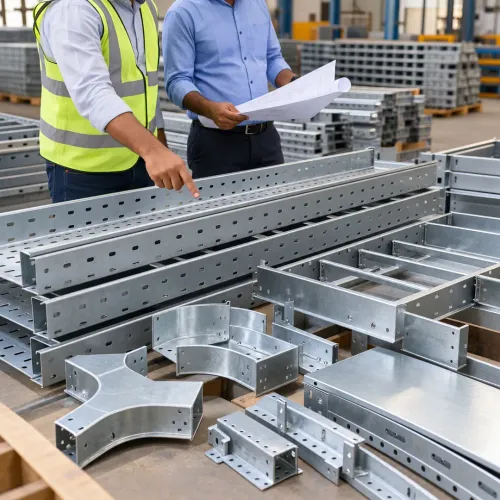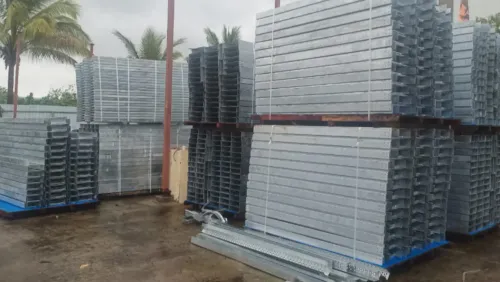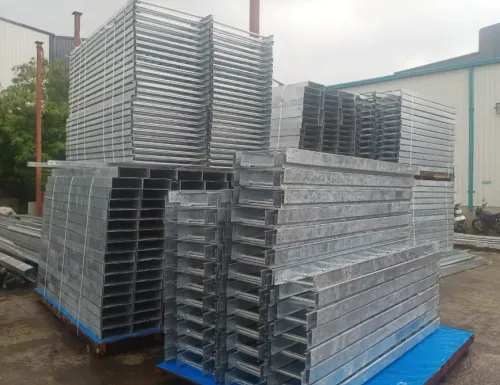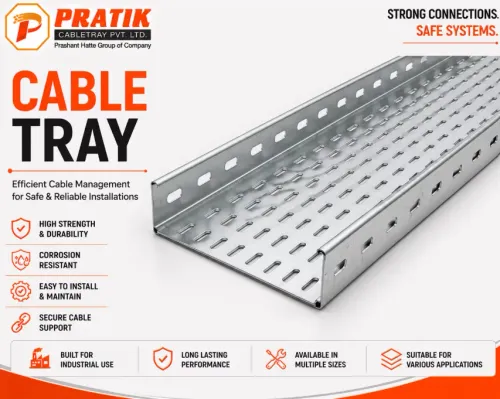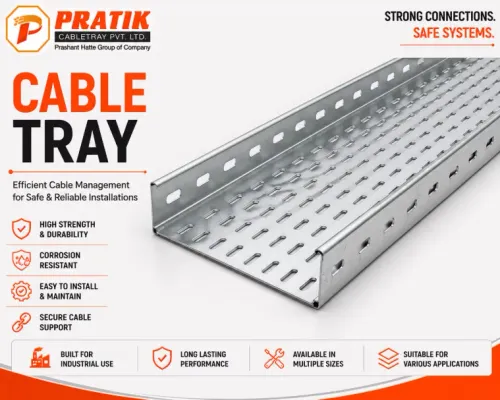
Perforated cable trays are commonly specified when a project requires organized cable support along with ventilation and convenient access. Their openings make them useful for routing electrical, control, instrumentation, and related cables across industrial and commercial installations.
When assessing a Perforated Cable Tray Manufacturer in Pune, understanding how the tray will actually be used is essential. Perforation pattern, dimensions, load, material thickness, surface protection, support spacing, and accessories should all correspond with the intended application.
How a Perforated Cable Tray Works
A perforated tray has openings distributed across its base and, depending on the design, other portions of the tray. These openings can reduce unnecessary material weight while allowing ventilation around installed cables.
The tray provides a defined route so cables are not left unsupported or distributed irregularly across service areas.
Typical applications can include:
- Industrial electrical installations
- Control panel cable routes
- Commercial buildings
- Manufacturing facilities
- Utility areas
- MEP services
- Instrumentation routes
- Equipment interconnections
Its suitability depends on cable type, loading, environmental conditions, and project design requirements.
Why Ventilation Can Matter
Electrical cables generate heat depending on their load and operating conditions. Cable arrangement and ventilation can therefore form part of system planning.
Perforations allow greater air movement than a completely enclosed cable-support surface. At the same time, the tray continues to provide support across the cable route.
Actual cable capacity and thermal considerations should always follow applicable engineering requirements rather than being estimated solely from tray dimensions.
Cable Organization Becomes Easier
One of the practical advantages of a defined cable tray route is organization.
Industrial projects may involve power, control, communication, and instrumentation cabling. Depending on design requirements, these may need separate routes or appropriate segregation.
Planning the tray system before installation helps engineers determine where cables enter equipment, where routes change direction, and how future maintenance personnel can access them.
Dimensions Should Match the Route
Tray width is only one part of specification.
A procurement team may also need to define:
- Tray depth
- Sheet thickness
- Length of each section
- Perforation requirements
- Material grade
- Surface finish
- Cover requirements
- Coupling arrangement
- Support configuration
Selecting these parameters according to project drawings reduces the risk of receiving products that are technically usable but inconvenient for the intended installation.
Surface Protection Needs Attention
Pune and Maharashtra projects cover diverse operating environments. A cable tray installed inside a controlled building may experience very different conditions from one installed in an industrial processing area.
Humidity, moisture, airborne contaminants, chemical exposure, and weather conditions can affect the appropriate material or surface protection.
The finish should therefore be specified according to project conditions and relevant engineering standards.
Accessories Complete the Cable Route
Straight tray sections are only the beginning of most installations.
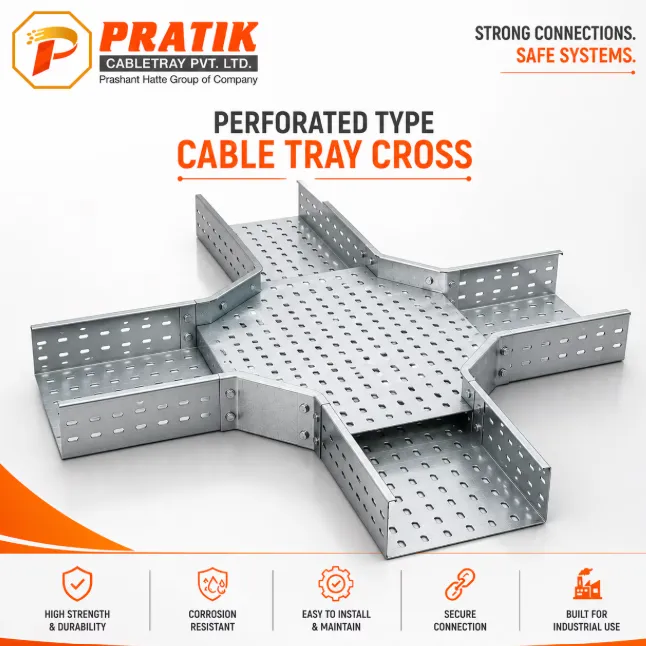
Direction changes and junctions can require horizontal bends, vertical bends, tees, crosses, reducers, couplers, covers, and supporting components. These items should ideally be coordinated with the main tray specification.
Matching accessories help maintain continuity throughout the cable route and reduce improvised fabrication at site.
Installation Planning Reduces Rework
Before ordering, the project team should review actual routing against drawings wherever possible. Equipment positions, structural beams, ducts, pipes, and other services may affect the cable tray path.
MEP consultants and electrical contractors can reduce installation difficulties by coordinating cable routes with other building and plant services before procurement reaches the final stage.
This becomes especially important in crowded utility areas.
Consistency Matters on Large Projects
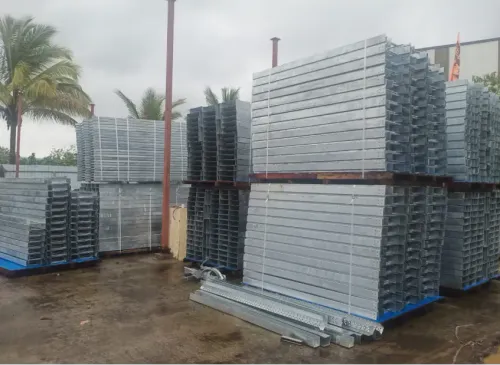
For large manufacturing units, commercial developments, and infrastructure projects, cable trays may be required in significant quantities.
Dimensional consistency across those quantities helps installation teams connect sections and accessories more efficiently. Accurate fabrication also supports cleaner routing and reduces the amount of correction needed on site.
Pratik Cabletray Pvt. Ltd. supplies cable management products for electrical and industrial applications in Pune and wider Maharashtra project environments. Specifications can be planned around actual project requirements rather than treating every installation as identical.
A well-selected perforated cable tray provides more than a pathway for cables. It contributes to ventilation, organization, accessibility, maintenance planning, and the overall discipline of an electrical installation.
Keywords