Cable tray problems often become visible during installation, but their causes may begin much earlier. Incomplete route planning, inaccurate quantities, incompatible accessories, unsuitable dimensions, or poorly coordinated services can all create avoidable site work.
Choosing an Industrial Cable Tray Supplier Pune is therefore only one part of the process. Contractors, consultants, project managers, and procurement teams also need to coordinate design and supply decisions before installation starts.
Problem 1: Tray Size Does Not Match Cable Requirements
A tray that is too small can create overcrowding and leave insufficient room for planned cable additions.
At the other extreme, unnecessarily oversized trays can increase material and supporting requirements.
Cable quantities, dimensions, weights, segregation requirements, and foreseeable expansion should be reviewed before tray sizes are finalized.
The goal is not simply to provide space for today's cable list but to establish a practical route for the intended electrical system.
Problem 2: Accessories Are Missing
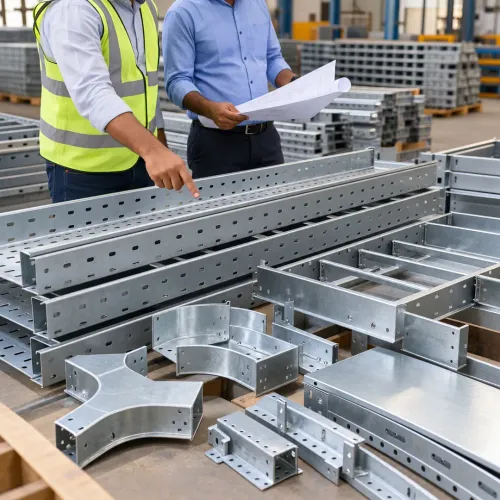
Straight tray lengths are easy to quantify. Bends, tees, reducers, crosses, couplers, and other components are easier to overlook.
The problem often becomes apparent only when installation reaches a junction or direction change.
A route-based material schedule can reduce these omissions. Instead of estimating accessories as a general percentage, review drawings and identify actual transitions.
Problem 3: Other Services Block the Route
Industrial cable trays often share utility areas with piping, ducts, fire services, equipment, and structural elements.
A route that looks clear on an electrical drawing may conflict with another service at site.
Coordinated MEP drawings and site verification can help identify these clashes before material installation. This is especially valuable in congested manufacturing and utility areas.
Problem 4: Support Planning Is Inadequate
Cable tray supports should be considered as part of the cable management design.
Support spacing and configuration depend on factors such as tray type, load, span, and installation arrangement. Leaving these decisions entirely until installation can create inconsistent results.
Engineering requirements should guide the supporting system.
Problem 5: Material Finish Does Not Suit the Environment
Cable trays may be installed in dry indoor areas, semi-exposed utility spaces, outdoor sections, or industrial environments.
Using the same material protection without considering environmental exposure can affect long-term suitability.
Pune and Maharashtra contain diverse manufacturing sectors, so project specifications should account for moisture, contaminants, weather exposure, and other site conditions where relevant.
Problem 6: Site Modification Becomes Routine
Some field adjustment is normal in complex projects. Constant cutting, drilling, and improvisation, however, may indicate inadequate planning or mismatch between supplied material and actual routing.
Accurate dimensions, coordinated accessories, and clear fabrication specifications can reduce unnecessary modifications.
Where non-standard requirements are known in advance, they should be discussed before manufacturing.
Problem 7: Deliveries Do Not Match Work Sequence
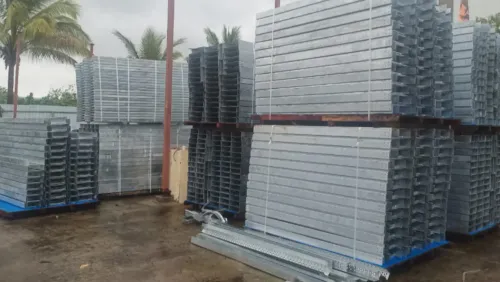
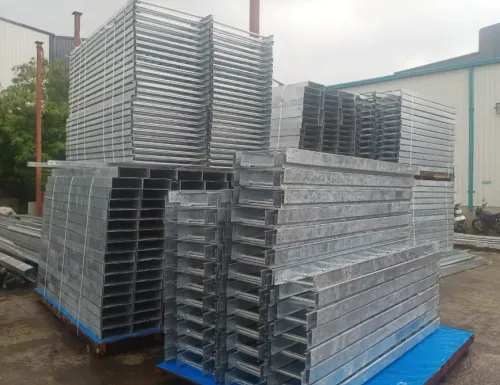
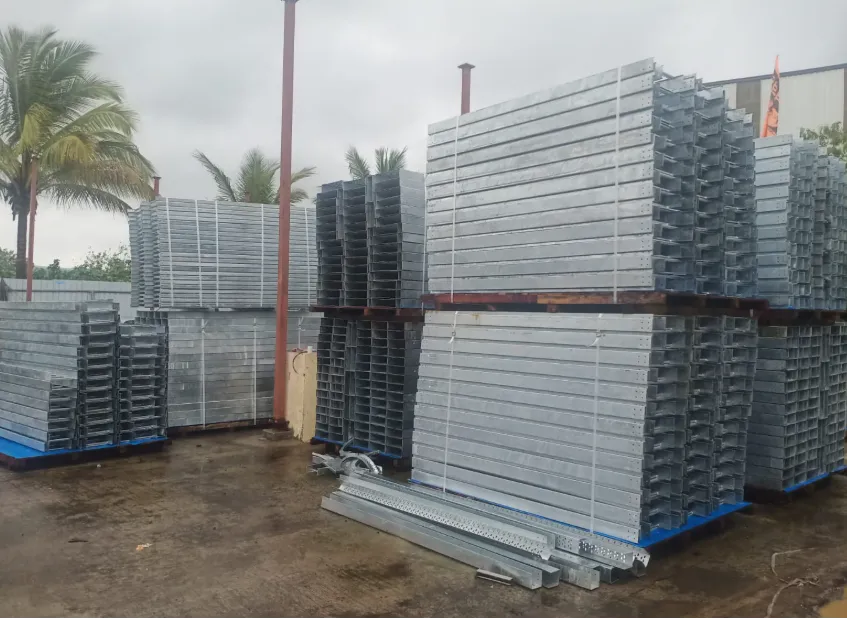
Receiving all cable tray material at once can create storage and identification challenges on large projects.
Conversely, receiving essential components too late can stop installation.
Contractors can coordinate procurement according to installation zones, floors, buildings, or production areas. Material identification also becomes important when several tray sizes and types are supplied.
Create a Pre-Installation Review
Before installation begins, teams can verify:
- Approved cable tray drawings
- Tray types and dimensions
- Cable load requirements
- Accessory quantities
- Support details
- Material finishes
- Route coordination
- Site dimensions
- Delivery sequence
- Future expansion requirements
This review can identify discrepancies while they are still easier to correct.
Pratik Cabletray Pvt. Ltd. supplies industrial cable management products from Pune for electrical and project applications. Clear technical communication between the manufacturer and project team can help ensure that tray dimensions, accessories, quantities, and specifications reflect actual installation requirements.
Most cable tray installation problems are easier to prevent during engineering and procurement than to correct after cables arrive at site. Better coordination at the beginning can therefore save significant effort during execution.
Keywords