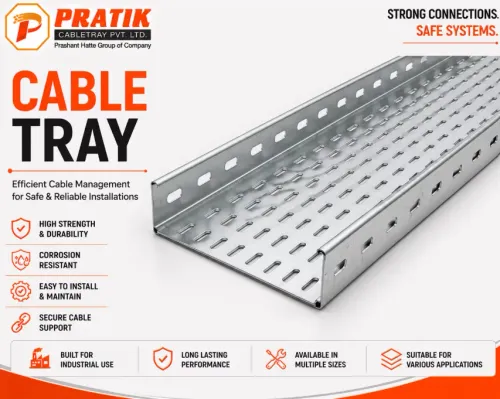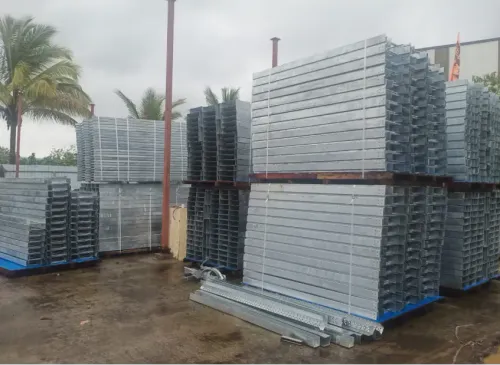
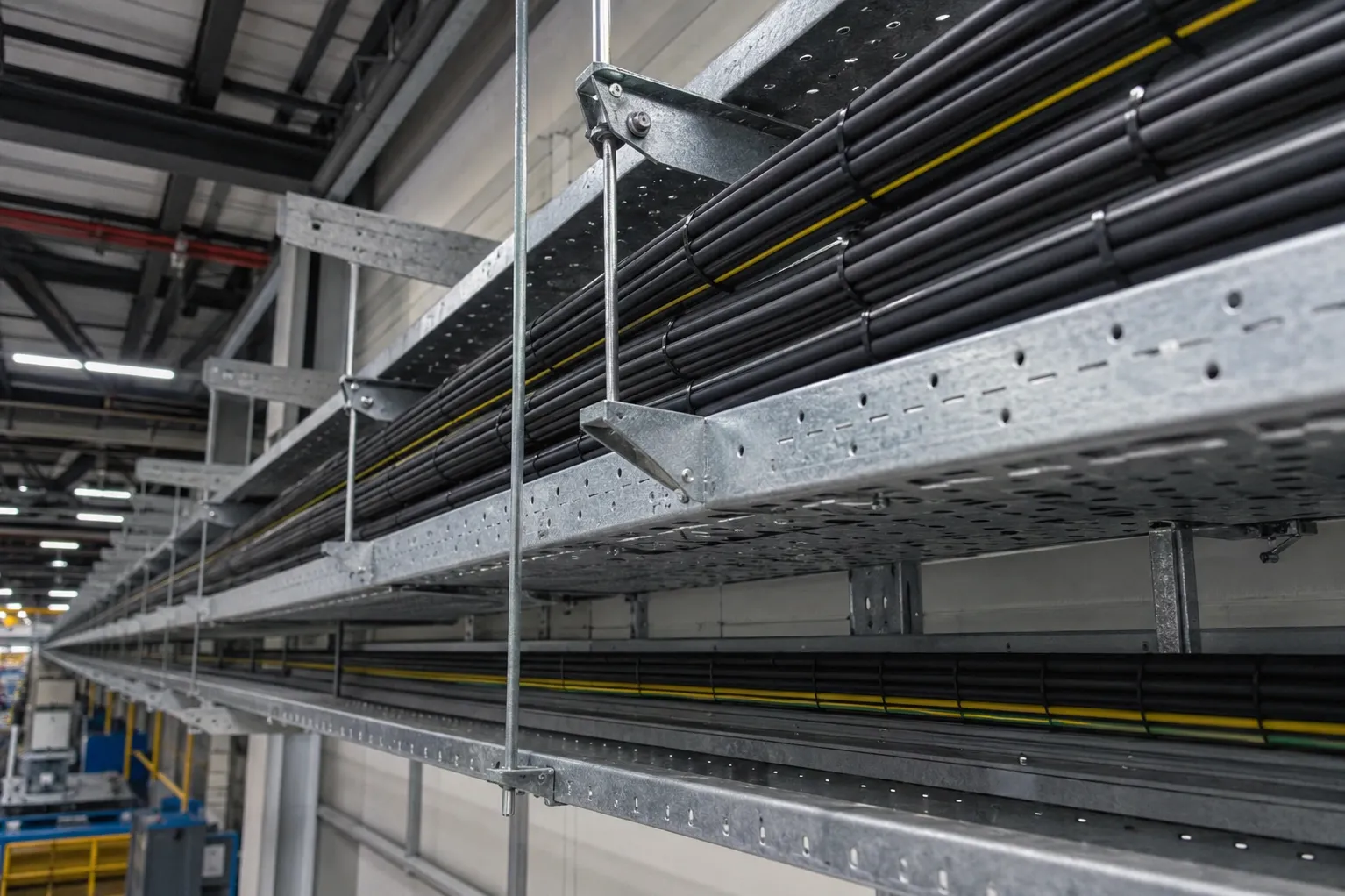
MS cable trays are widely used in factories, commercial buildings, utility facilities, infrastructure projects, and process plants where electrical cables need organized and dependable routing. Choosing the right tray, however, involves more than deciding its width and placing an order.
For electrical contractors and project teams evaluating an MS Cable Tray Manufacturer Pune, the starting point should be the actual operating environment. Cable load, installation location, corrosion exposure, support spacing, cable type, and future expansion can all affect the appropriate tray configuration.
Why MS Cable Trays Are Used in Industrial Installations
Mild steel offers the structural strength required for many demanding cable-routing applications. When correctly fabricated and protected with a suitable surface finish, an MS cable tray can provide a practical combination of strength, installation flexibility, and cost efficiency.
Common applications include:
- Manufacturing plants
- Electrical control rooms
- Commercial buildings
- Utility areas
- Warehouses
- Machinery installations
- Infrastructure projects
- Process facilities
- Data and communication cable routes
The tray should not be selected simply because a particular size has been used on another project. Each installation has its own load and environmental requirements.
Start With the Cable Load
Cable quantity has a direct influence on tray dimensions and structural requirements. A tray that appears adequate during the initial installation can become overcrowded if future cables are added without sufficient spare capacity.
Before finalizing specifications, project teams should consider:
- Number and type of cables
- Approximate cable weight
- Required segregation
- Planned spare capacity
- Cable bending requirements
- Support distance
- Route length and direction changes
This assessment helps determine suitable tray width, depth, sheet thickness, and supporting arrangement.
Consider the Installation Environment
An indoor electrical room and a semi-exposed industrial utility area do not necessarily require identical cable tray specifications.
Environmental conditions can influence material protection and service life. Moisture, chemical exposure, dust, ventilation, heat, and outdoor weather conditions should therefore be reviewed before deciding the finish.
In Pune and across Maharashtra, cable trays may be installed in environments ranging from controlled commercial buildings to engineering plants and industrial facilities. Project-specific conditions should guide material and coating decisions rather than relying on a single specification for every location.
Fabrication Quality Matters
A cable tray is part of an electrical cable management system, so dimensional consistency is important.
Poor fabrication can create practical problems during installation, including difficulty joining sections, uneven alignment, sharp edges, and mismatch with accessories.
Important manufacturing considerations include:
- Consistent dimensions
- Suitable material thickness
- Clean cutting and forming
- Accurate perforations where applicable
- Properly formed bends
- Compatible couplers and accessories
- Appropriate surface treatment
- Smooth edges for safer cable handling
For larger projects, repeatability across multiple production batches becomes especially important.
Plan Accessories With the Main Tray
A cable route rarely consists only of straight lengths.
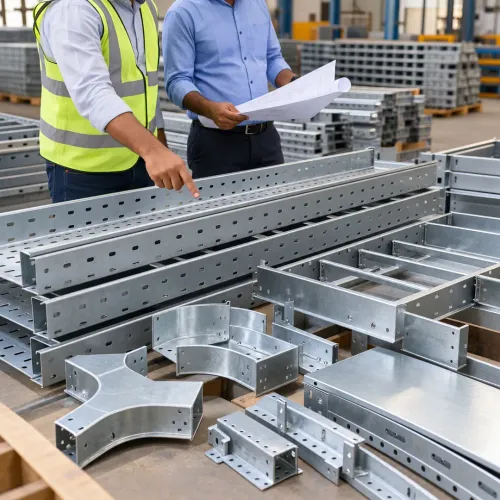
Bends, tees, reducers, crosses, couplers, brackets, covers, and other accessories may be needed to complete the installation. Treating accessories as an afterthought can create site delays when routing reaches columns, equipment, junctions, or changes in elevation.
Preparing the complete routing requirement before procurement makes quantity planning more reliable.
Think About Installation Efficiency
Good cable tray selection can also reduce unnecessary site work.
When tray sections and accessories match project drawings and actual routing requirements, installation teams spend less time modifying components at the site. This can improve alignment and make cable routing easier to inspect and maintain.
Standardization is particularly useful on projects containing repeated production areas, floors, utility corridors, or equipment lines.
Allow for Future Cable Requirements
Electrical infrastructure often changes during the life of a facility. New machinery, automation systems, communication cables, control equipment, or electrical loads may be introduced later.
Providing sensible spare capacity during the initial design can make future additions easier without requiring major modifications to the existing cable management arrangement.
This does not mean oversizing every tray. It means considering foreseeable expansion as part of engineering decisions.
What to Discuss With the Manufacturer
Before production begins, drawings and specifications should clearly communicate the required dimensions, material, thickness, finish, quantities, accessories, and any project-specific fabrication details.
Pratik Cabletray Pvt. Ltd. manufactures cable management products for industrial and project requirements in Pune. As with any engineered cable tray procurement, the most effective approach is to align manufacturing specifications with the electrical layout and actual site conditions.
MS cable tray selection ultimately depends on more than material alone. Load, environment, fabrication, accessories, supports, and expansion requirements all contribute to a cable management system that is easier to install, maintain, and adapt over time.
Keywords