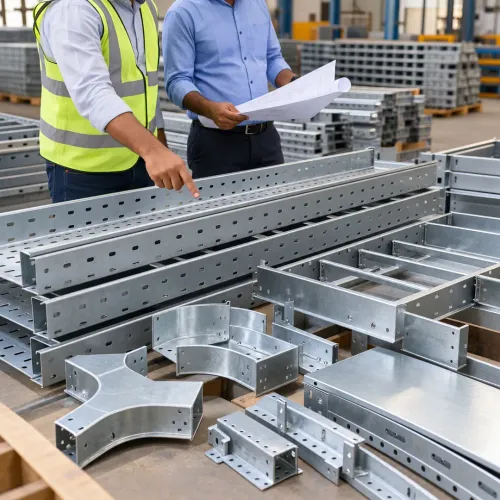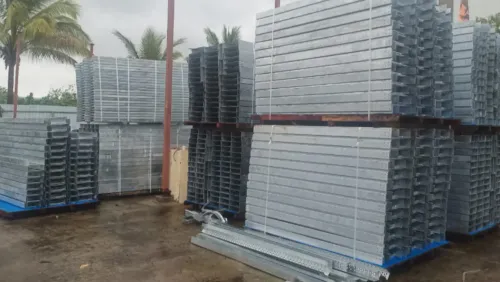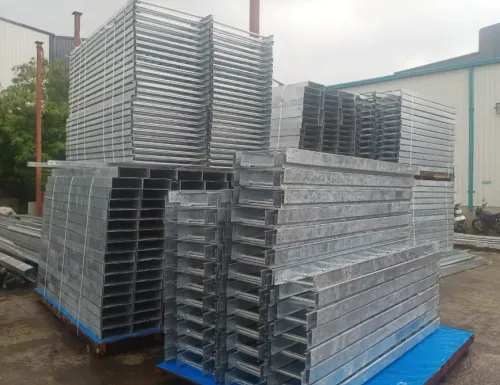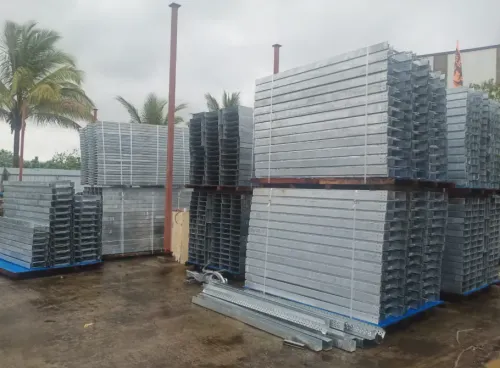
Heavy power cables require a cable support system designed around their weight, route, accessibility, and installation conditions. Ladder-type cable trays are frequently considered for industrial electrical networks because their construction provides strong cable support while maintaining an open structure.
For project teams researching a Ladder Cable Tray Manufacturer in Pune, the key question is not simply whether ladder trays are available. The more important question is whether the tray dimensions, rung arrangement, material, finish, supports, and accessories are suitable for the intended cable load.
What Makes a Ladder Cable Tray Different
A ladder cable tray generally consists of two longitudinal side members connected by transverse rungs. The resulting structure resembles a ladder and creates an open cable-support route.
This design can be useful where larger power cables need support without a continuous solid base.
Common project environments include:
- Manufacturing plants
- Power distribution areas
- Industrial utility sections
- Infrastructure installations
- Large commercial facilities
- Equipment power routes
- Process plants
The final selection should always reflect engineering requirements and the characteristics of the installed cables.
Cable Weight Is a Critical Design Input
Power cables can create substantial loading over long runs. The combined weight of cables, tray components, and possible future additions must therefore be considered during specification.
Project engineers should evaluate cable load together with support spacing. Increasing the distance between supports changes the structural demand placed on the tray.
The appropriate tray design should be determined from the complete installation condition rather than tray width alone.
Open Construction Supports Access
The open structure of ladder trays provides convenient access to cables during installation and maintenance.
Installers can often secure cables to the rungs at appropriate intervals, while maintenance teams can visually inspect the route more easily than with a fully enclosed system.
This accessibility can be particularly useful in industrial environments where electrical systems may be expanded or modified as equipment changes.
Rung Spacing Should Suit the Cable
Rung spacing influences how cables are supported along the route.
The correct arrangement depends on factors such as cable diameter, flexibility, weight, and allowable support interval. A configuration suitable for one group of large power cables may not automatically be appropriate for every other cable type.
Engineering specifications should therefore clearly define the required ladder configuration.
Plan Route Changes Before Ordering
Industrial cable routes rarely remain straight from start to finish.
They may need to move around structural members, rise between levels, enter electrical rooms, branch toward equipment, or transition into another tray size.
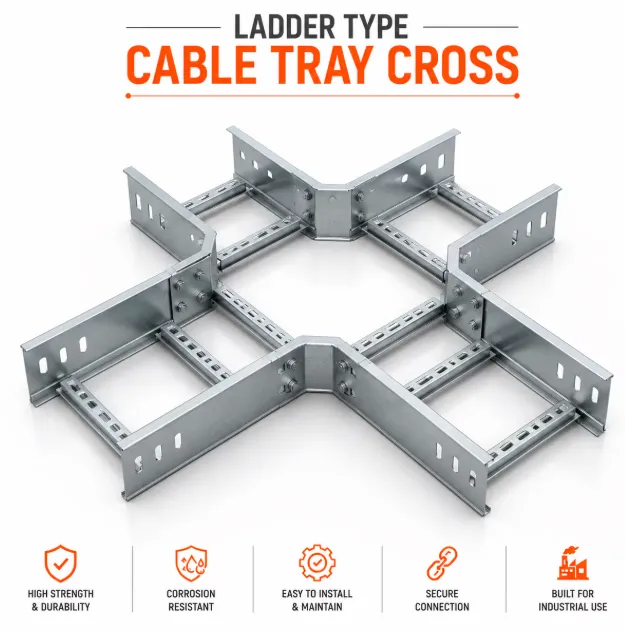
A complete ladder tray system may therefore require:
- Horizontal bends
- Vertical bends
- Tees
- Crosses
- Reducers
- Couplers
- Covers where required
- Supporting arrangements
Planning these components alongside straight sections helps avoid interruptions during installation.
Corrosion Conditions Cannot Be Ignored
Material and finish should reflect the environment in which the tray will operate.
Indoor, dry installations may have different protection requirements from outdoor, humid, or industrial environments. Facilities involving corrosive atmospheres may require additional consideration.
For projects in Pune and other industrial regions of Maharashtra, procurement specifications should describe environmental exposure clearly so that the selected cable tray system is appropriate for its intended location.
Coordination With Other Services Is Essential
Cable tray routes frequently share space with HVAC ducts, piping, fire protection services, structural systems, and other MEP installations.
Early coordination helps maintain required access and reduces clashes. This is especially important for ladder trays carrying large cables because relocating a heavily loaded route later can be difficult.
Three-dimensional coordination, coordinated drawings, and accurate site measurements can therefore improve installation efficiency.
Think Beyond Initial Installation
Industrial electrical networks are rarely static. Production equipment may be added, panels relocated, or capacity expanded.
Where practical, designers should consider foreseeable cable additions when selecting tray dimensions and planning route accessibility.
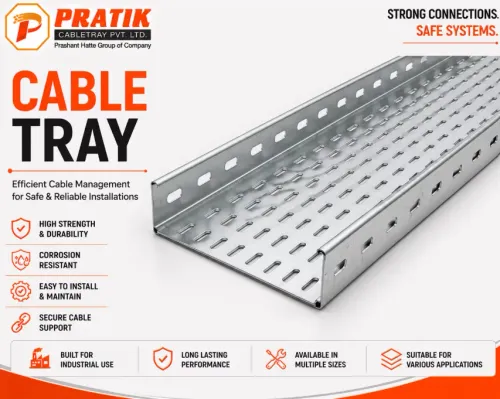
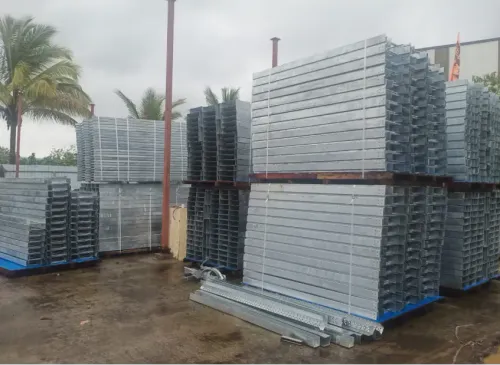
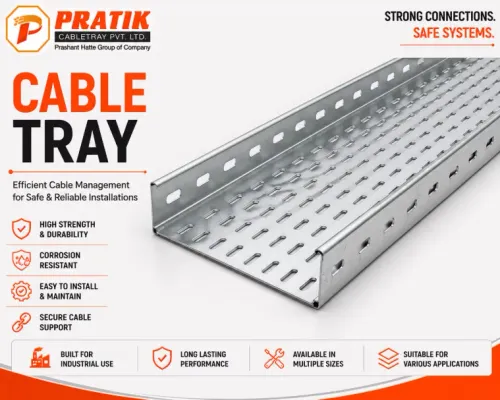
Pratik Cabletray Pvt. Ltd. manufactures cable tray systems for industrial and electrical project requirements in Pune. For EPC companies, contractors, and project managers, communicating load, dimensions, finish, routing, and accessory requirements before manufacturing can help align the supplied system with site needs.
Ladder cable trays are most effective when treated as an engineered support system rather than a collection of metal sections. Proper planning around cable weight, support intervals, route changes, environmental conditions, and future requirements creates a more manageable cable infrastructure.
Keywords