Selecting a cable tray supplier is one of the most important decisions during an electrical infrastructure project. Cable trays provide the foundation for organised cable routing, making them essential for commercial buildings, manufacturing plants, warehouses, hospitals, data centres, and infrastructure developments. While price often influences procurement decisions, choosing a supplier based only on cost can create challenges during installation and throughout the life of the project.
For procurement managers, EPC companies, MEP consultants, electrical contractors, and industrial facility owners, evaluating cable tray suppliers using clear technical and operational criteria leads to better purchasing decisions and smoother project execution.
Why Supplier Evaluation Is Important
Cable trays are expected to perform reliably for many years. A supplier that consistently manufactures quality products can help minimise installation delays, reduce maintenance requirements, and ensure compatibility across the complete cable management system.
A structured evaluation process helps identify manufacturers capable of meeting project specifications while maintaining quality and delivery commitments.
Review the Manufacturer's Product Portfolio
Industrial projects rarely require only one cable tray type. Different sections of a facility may need different cable management solutions depending on cable volume, routing requirements, and installation conditions.
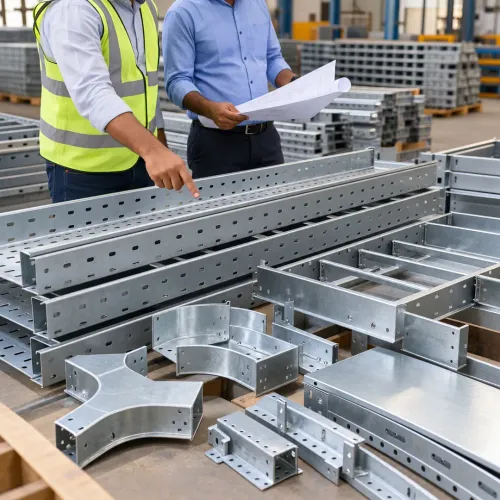
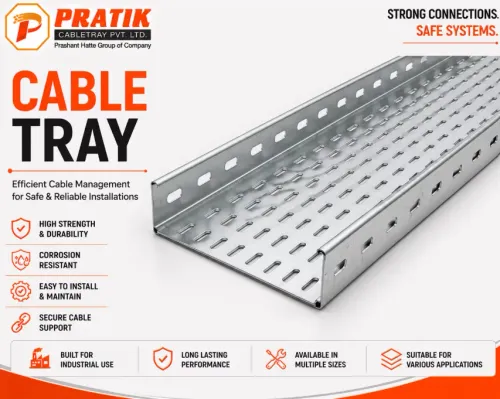
A reliable supplier should offer products such as
- Perforated cable trays
- Ladder cable trays
- Wire mesh cable trays
- Raceway systems
- Cable tray covers
- Cable tray accessories
- Support brackets
- Horizontal and vertical bends
- Tee and cross sections
A comprehensive product range allows procurement teams to source compatible components from a single manufacturer, simplifying purchasing and installation.
Assess Manufacturing Capabilities
Understanding how a manufacturer produces cable trays provides valuable insight into product consistency and quality.
When evaluating suppliers, consider whether they have
- Modern manufacturing equipment
- Consistent fabrication processes
- Accurate dimensional control
- Reliable welding practices
- Quality finishing techniques
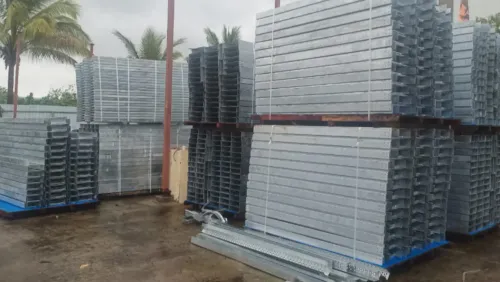
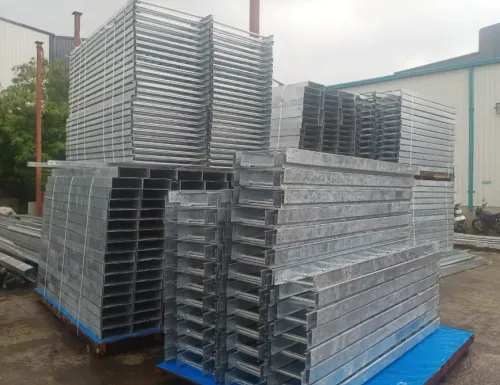
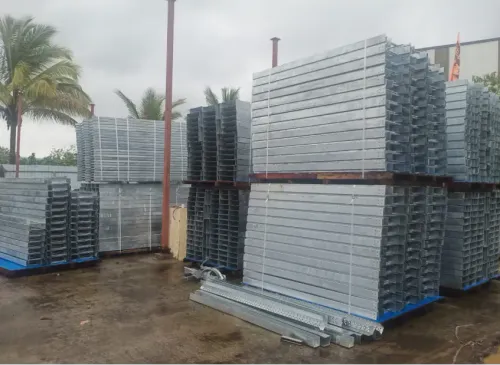
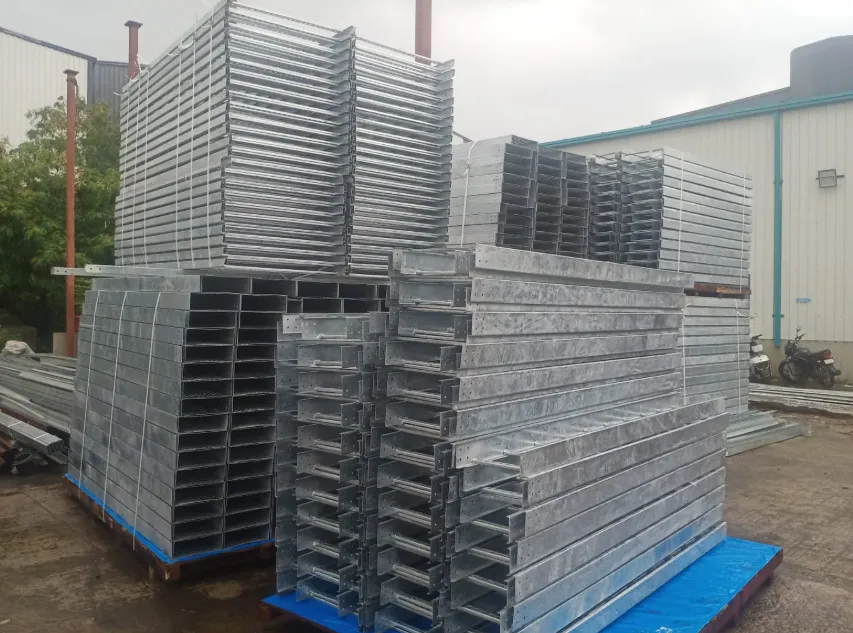
- Capacity to handle bulk orders
Manufacturers with established production systems are generally better prepared to support large industrial projects.
Check Material Options
Different operating environments require different materials. A capable supplier should be able to recommend products based on project conditions rather than offering a single standard solution.
Common material options include
- Mild Steel (MS)
- Galvanized Iron (GI)
- Hot-dip galvanized steel
- Stainless steel
- Powder-coated finishes
Selecting the appropriate material helps improve durability and supports long-term system performance.
Evaluate Customisation Capabilities
Many industrial projects require cable trays that differ from standard catalogue sizes.
Ask whether the supplier can manufacture
- Custom tray widths
- Special lengths
- Heavy-duty cable trays
- Custom bends
- Project-specific support structures
- Non-standard accessories
Manufacturers with custom fabrication capabilities are often better suited to complex industrial projects.
Understand Delivery and Production Capacity
Meeting construction deadlines depends heavily on timely material supply.
Before selecting a supplier, discuss
- Production lead times
- Manufacturing capacity
- Delivery schedules
- Emergency order handling
- Phased project deliveries
Reliable production planning helps reduce the likelihood of project delays caused by unavailable materials.
Look for Technical Support
The best suppliers contribute more than manufactured products. Technical assistance during planning and installation can help improve project efficiency.
Useful support may include
- Product selection guidance
- Assistance with tray sizing
- Recommendations for accessories
- Support with customised requirements
- Coordination with consultants and contractors
This level of collaboration often results in smoother installation and fewer site-related issues.
Consider the Advantages of a Local Supplier
Projects located in Pune and throughout Maharashtra can benefit from working with a regional manufacturer.
Local suppliers often provide
- Faster transportation
- Better communication
- Easier site coordination
- Reduced logistics costs
- Faster response to design revisions
- Improved after-sales support
These practical advantages become particularly valuable for projects operating under tight construction schedules.
Questions to Include During Supplier Evaluation
A structured discussion with potential suppliers helps procurement teams compare manufacturers more effectively.
Consider asking
- What industries do you regularly supply?
- Can you manufacture customised cable trays?
- What quality inspection procedures are followed?
- Which protective finishes are available?
- Can accessories be supplied with the cable trays?
- What production capacity do you maintain?
- How do you support projects with changing requirements?
These questions provide valuable information beyond product pricing.
Building Long-Term Value Through the Right Supplier
Choosing a cable tray supplier is not simply a purchasing decision—it is an investment in the reliability of the project's electrical infrastructure. Evaluating manufacturing quality, technical capability, material options, and delivery performance helps create a cable management system that performs efficiently throughout its service life.
Companies such as Pratik Cabletray Pvt. Ltd. support industrial and commercial developments by manufacturing a wide range of cable trays and cable management solutions for projects across Pune and Maharashtra. Reviewing the company's manufacturing capabilities, quality standards, and product offerings can help buyers make informed procurement decisions.
A thorough supplier evaluation process reduces uncertainty, improves project coordination, and contributes to an organised electrical installation that remains dependable as operational requirements continue to evolve.
Keywords