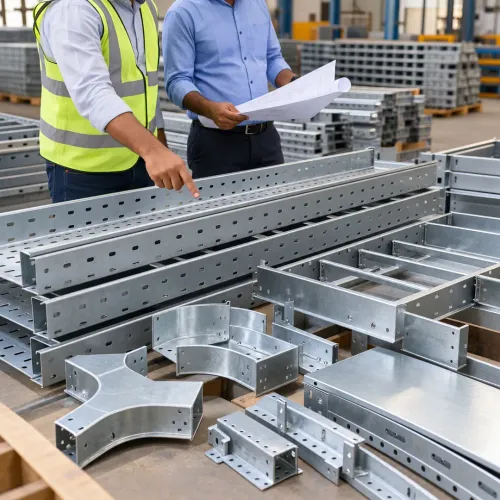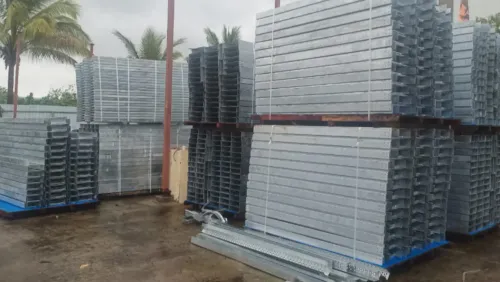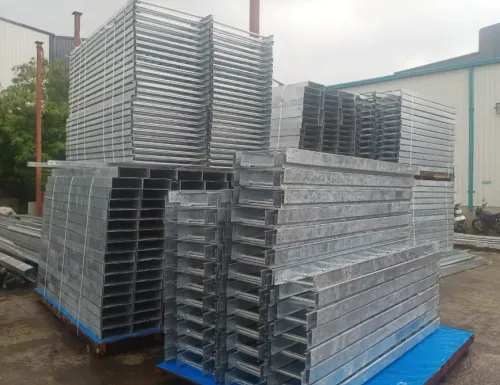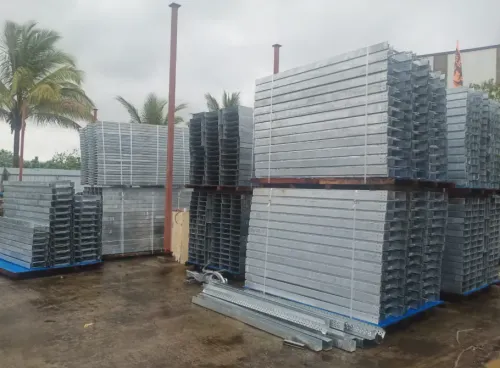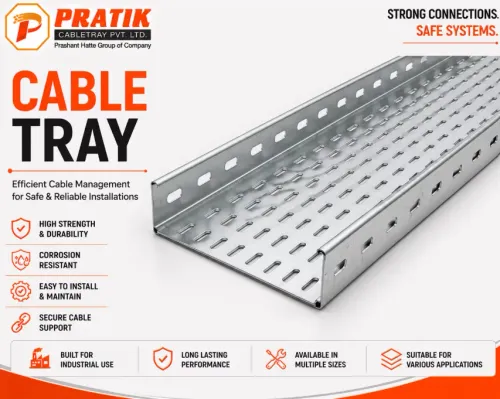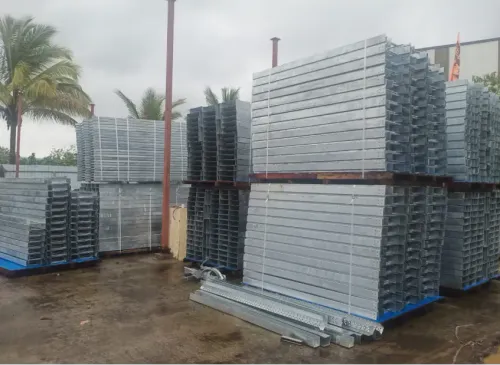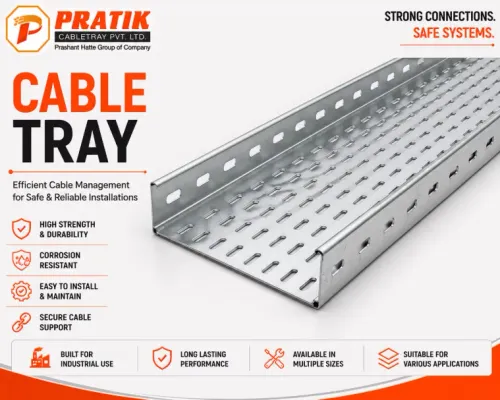
When planning an electrical installation, most attention is given to selecting the right cable tray. However, a cable management system is only as effective as the accessories that support it. Bends, connectors, brackets, covers, reducers, and support structures all play an important role in creating a safe, organised, and durable installation.
Whether the project involves a manufacturing plant, commercial building, warehouse, hospital, or infrastructure development, choosing a reliable cable tray accessories manufacturer Pune helps ensure that every part of the system works together efficiently. Understanding the purpose of these accessories can help project teams avoid installation challenges and improve long-term maintenance.
Why Cable Tray Accessories Matter
Cable trays provide the primary pathway for electrical cables, but they cannot function effectively without properly designed accessories. These components help the tray adapt to changes in direction, elevation, cable quantity, and structural layout while maintaining stability throughout the installation.
Using compatible accessories also reduces the need for on-site modifications, resulting in a cleaner and more professional electrical system.
Common Cable Tray Accessories and Their Functions
Each accessory serves a specific purpose within the cable management system. Selecting the correct components improves both installation quality and long-term reliability.
Horizontal Bends
Electrical cable routes often need to change direction along a building or industrial facility. Horizontal bends allow cable trays to turn smoothly without creating sharp cable bends that may damage insulation or make maintenance difficult.
Vertical Bends
In multi-level buildings or industrial plants, cable trays frequently need to move upward or downward. Vertical bends support these elevation changes while maintaining continuous cable routing.
Tee Sections
When a cable route branches into different directions, tee sections allow the cable tray system to divide neatly. These fittings are commonly used in large industrial facilities and commercial buildings where multiple electrical circuits extend from a central distribution point.
Cross Sections
Cross sections create four-way cable tray intersections, making them useful in complex electrical layouts where several cable routes meet.
Reducers
Different sections of a project may require cable trays of varying widths. Reducers allow smooth transitions between larger and smaller tray sizes without interrupting cable flow.
Coupler Plates and Connectors
Straight cable tray sections are joined together using coupler plates and connectors. Proper alignment improves structural strength and ensures continuous support for the installed cables.
Tray Covers
In environments where cables require additional protection from dust, debris, or accidental contact, tray covers provide an added layer of safety while maintaining organised cable routing.
Support Brackets
Support brackets secure the cable tray system to walls, ceilings, or structural steel. Correct support spacing is essential for maintaining load-bearing capacity and preventing unnecessary stress on the tray.
Why Accessory Compatibility Is Important
Purchasing cable trays and accessories from different manufacturers may seem convenient, but slight variations in dimensions or fabrication standards can create alignment issues during installation.
Using a complete system from a single manufacturer offers several advantages
- Consistent dimensions
- Better fitting components
- Faster installation
- Reduced modification work
- Improved structural integrity
- Easier future maintenance
Compatibility helps maintain the overall quality of the cable management system from start to finish.
Factors to Consider When Selecting Cable Tray Accessories
Before placing an order, project teams should evaluate several technical considerations.
Material Selection
Accessories should match the material and finish of the cable tray to maintain consistent performance throughout the installation.
Common material options include
- Mild Steel (MS)
- Galvanized Iron (GI)
- Hot-dip galvanized steel
- Stainless steel
- Powder-coated steel
The selection depends on environmental conditions and project specifications.
Load Requirements
Support brackets, connectors, and suspension systems should be capable of handling the weight of both the cable tray and the installed cables.
Installation Environment
Projects located in humid, dusty, or corrosive environments may require accessories with enhanced protective finishes to improve durability.
Future Expansion
Electrical systems often grow over time. Selecting accessories that allow additional tray sections or cable routes to be integrated later can reduce future modification costs.
Benefits of Working with a Local Manufacturer
Choosing a cable tray accessories manufacturer Pune offers several practical advantages for projects across Pune and Maharashtra.
Faster Deliveries
Construction schedules often require accessories at short notice. Local manufacturing helps reduce transportation time and improves supply chain efficiency.
Easier Customisation
Some projects require non-standard brackets, supports, or fabricated fittings. A nearby manufacturer can often produce customised components within project timelines.
Better Project Coordination
Electrical consultants, EPC contractors, and installation teams can communicate more effectively with local manufacturers when discussing technical requirements or design changes.
Reliable Product Availability
Sourcing accessories from the same manufacturer as the cable trays helps ensure product consistency and reduces procurement complexity.
Choosing the Right Manufacturing Partner
A dependable manufacturer should offer more than a catalogue of products. Look for suppliers with experience in serving industrial and commercial projects, strong manufacturing capabilities, and a comprehensive range of cable management solutions.
When evaluating manufacturers, consider
- Product quality and consistency
- Availability of standard and customised accessories
- Manufacturing capacity
- Quality inspection processes
- Delivery performance
- Technical support for project-specific requirements
Companies such as Pratik Cabletray Pvt. Ltd. manufacture cable tray accessories alongside complete cable management systems for projects across Pune and Maharashtra. Reviewing the company's product range and engineering capabilities helps ensure that every component works together as part of a reliable installation.
Cable tray accessories may appear to be small components, but they play a vital role in the performance of the entire electrical infrastructure. Selecting high-quality, compatible accessories contributes to safer installations, easier maintenance, and a cable management system that can support changing operational requirements for years to come.
Keywords