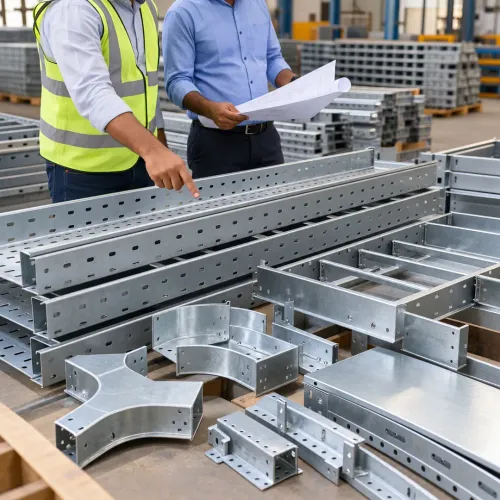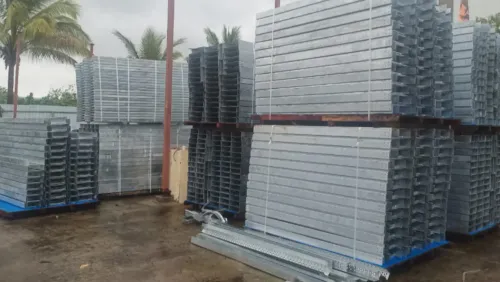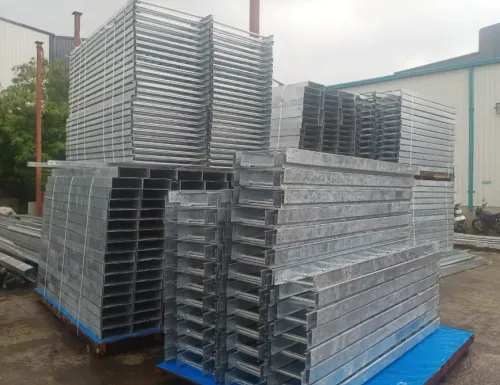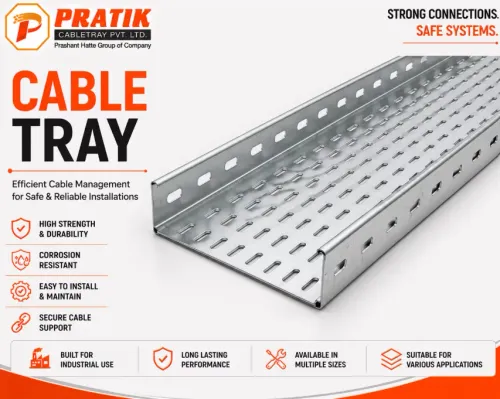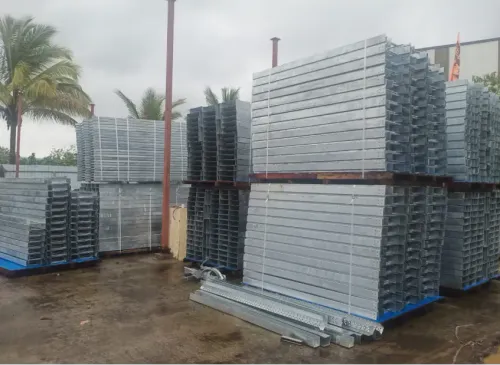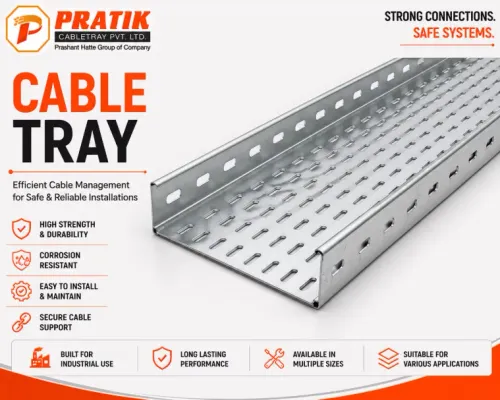
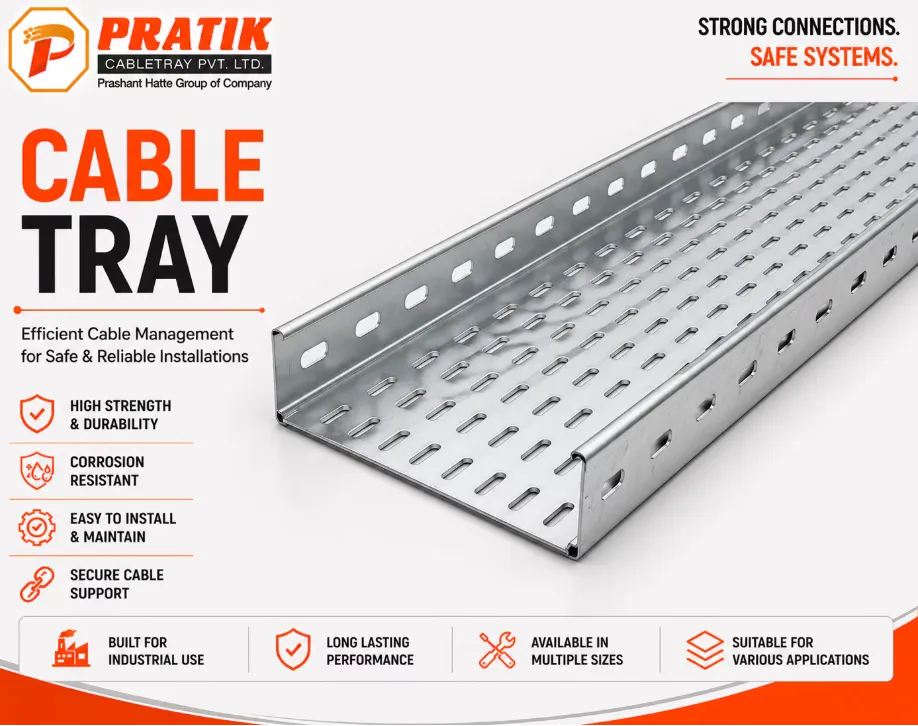
Cable tray procurement can appear complete when straight tray quantities have been calculated. Installation teams often discover the missing pieces only when the route reaches its first bend, junction, equipment connection, or level change.
Working with a Cable Tray Accessories Manufacturer Pune therefore involves more than purchasing a few additional components. Accessories need to be coordinated with tray type, dimensions, route geometry, supporting arrangements, and project drawings.
Why Accessories Should Be Planned Early
Cable tray accessories create continuity between different parts of the route.
If they are not included during quantity planning, contractors may face unexpected site fabrication or procurement delays. This can become particularly disruptive on large industrial projects where several teams depend on coordinated MEP progress.
A complete bill of materials should therefore consider the full route rather than only its straight length.
Identify Every Direction Change
Start by reviewing the cable tray layout for horizontal and vertical changes.
Depending on the system, a project may require:
- Horizontal bends
- Internal vertical bends
- External vertical bends
- Tees
- Crosses
- Reducers
- Couplers
- Covers
- Supporting brackets
- Fastening components
The terminology and exact configuration can vary by project specification, so drawings should be checked before finalizing quantities.
Check Compatibility With the Main Tray
An accessory should match the tray it connects to.
Width, depth, material thickness, finish, and connection arrangement need to be compatible. A mismatch can result in poor alignment or additional modification during installation.
This becomes especially important when a project uses several tray widths. Procurement teams should clearly identify which accessories correspond to each tray size.
Review Every Branch Point
Cable tray routes often divide as they approach different electrical panels, machines, production areas, or building zones.
These branching points need particular attention during quantity estimation.
A tee may be required where one route branches into two directions, while a cross may suit certain multi-directional layouts. Reducers can be required when the tray width changes because the number of cables decreases along the route.
Reviewing the cable layout section by section helps identify these requirements accurately.
Include Support Components in Planning
A cable tray system also needs appropriate structural support.
The exact arrangement depends on tray type, cable loading, installation location, and structural conditions. Wall-mounted routes, suspended routes, and equipment-area installations may require different supporting methods.
Support spacing should follow engineering requirements and should not be decided solely on convenience during installation.
Confirm Surface Finish
Accessories and the main tray should generally be specified with compatible material and protection requirements.
Using components intended for different exposure conditions can create inconsistency within the cable route. Project documentation should therefore clearly state material and finish requirements for both trays and accessories.
This is relevant for Pune and Maharashtra projects where installations may range from controlled commercial interiors to industrial production environments.
Avoid Excessive Site Modification
Site teams can sometimes fabricate or modify components to solve unexpected routing problems, but routine dependence on such modifications can affect installation consistency and consume additional labour.
Better coordination between electrical drawings, site conditions, and procurement reduces this need.
Before releasing the final order, verify:
- Tray type and size.
- Total straight lengths.
- Horizontal route changes.
- Vertical transitions.
- Branch points.
- Width transitions.
- Required covers.
- Coupling components.
- Supporting arrangements.
- Material and finish specifications.
Coordinate Delivery With Installation Sequence
Large projects may not need every accessory delivered at the same time.
Procurement and project teams can coordinate supply according to installation zones or phases. Clear identification of accessory sizes can also help site teams avoid confusion when several tray systems are being installed simultaneously.
Pratik Cabletray Pvt. Ltd. manufactures cable trays and associated cable management components for industrial and electrical projects in Pune. Providing accurate layouts, schedules, specifications, and quantity requirements allows the manufacturing scope to be aligned more closely with actual site needs.
A cable tray system is complete only when cables can follow their intended route continuously. Planning accessories early helps contractors reduce interruptions, improve alignment, and move from drawings to installation with fewer avoidable adjustments.
Keywords