Purchasing cable trays may seem like a straightforward task, but selecting the right product requires careful evaluation of several technical and practical factors. The cable tray you choose will support your electrical infrastructure for years, making it an important investment for commercial buildings, industrial plants, warehouses, hospitals, educational institutions, and infrastructure projects.
If you are planning to buy a cable tray in Pune, understanding what to evaluate before placing an order can help you avoid costly mistakes and ensure your electrical installation remains safe, organised, and easy to maintain.
Understand Your Project Requirements First
Before comparing suppliers or requesting quotations, define the technical requirements of your project. Different facilities have different electrical layouts, cable loads, and operating environments, so selecting a cable tray without proper planning can lead to installation challenges later.
Start by identifying
- The type of building or facility
- The number of electrical and communication cables
- Expected cable weight
- Indoor or outdoor installation
- Future expansion plans
- Required tray dimensions
Having this information available helps both the buyer and manufacturer recommend the most suitable cable management solution.
Choose the Right Type of Cable Tray
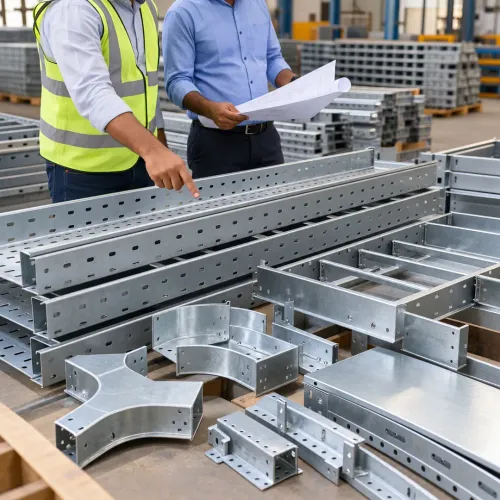
Cable trays are available in several designs, each intended for specific applications.
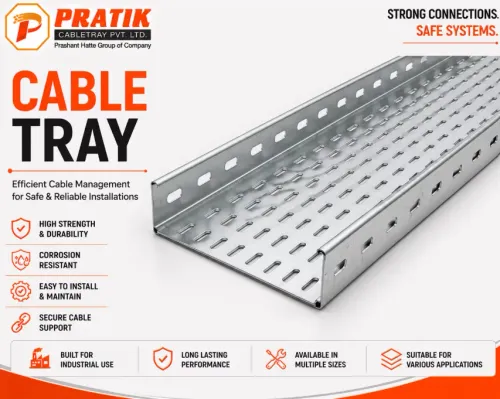
Perforated Cable Trays
Suitable for commercial buildings and industrial facilities where moderate cable loads require organised routing and improved ventilation.
Ladder Cable Trays
Designed for heavy-duty power cable installations. Their open structure promotes excellent airflow and supports higher cable loads.
Wire Mesh Cable Trays
Often used for data cables, communication systems, and low-voltage wiring in offices, hospitals, and IT facilities where flexibility is important.
Selecting the appropriate tray type depends on the electrical design rather than personal preference.
Select the Appropriate Material
The material used in manufacturing the cable tray directly affects its durability and performance.
Common options include
- Mild Steel (MS)
- Galvanized Iron (GI)
- Hot-dip galvanized steel
- Stainless steel
- Powder-coated steel
Environmental conditions such as humidity, chemical exposure, and outdoor installation should influence the material selection.
Pay Attention to Load Capacity
One of the most overlooked aspects during procurement is load-bearing capacity.
Cable trays should comfortably support
- Existing cable weight
- Additional future cables
- Installation accessories
- Long-span structural requirements
Selecting an undersized tray may result in unnecessary stress and reduce the overall efficiency of the cable management system.
Do Not Forget Accessories
A cable tray installation is incomplete without the necessary accessories. Purchasing everything together ensures better compatibility and simplifies installation.
Essential accessories typically include
- Horizontal bends
- Vertical bends
- Tee sections
- Cross sections
- Reducers
- Coupler plates
- Covers
- Support brackets
- Fasteners
Including these items in the initial procurement plan helps avoid project delays caused by missing components.
Evaluate the Manufacturer Carefully
Choosing the right supplier is just as important as selecting the right product.
When comparing manufacturers, look beyond pricing and consider
- Manufacturing experience
- Product quality
- Range of cable tray systems
- Custom fabrication capability
- Quality inspection procedures
- Delivery commitments
- Technical support
A manufacturer with strong engineering capabilities can often assist in selecting products that align with your project's specifications.
Benefits of Buying from a Pune-Based Manufacturer
For projects located in Pune and across Maharashtra, purchasing from a local manufacturer offers several operational advantages.
These include
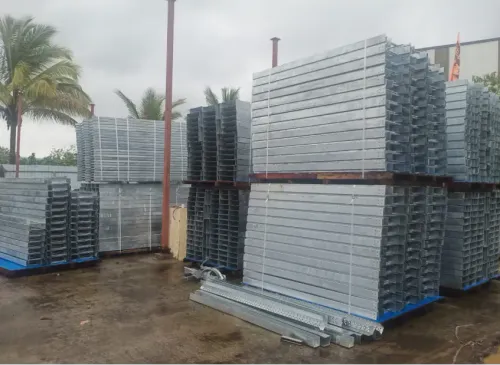
- Reduced transportation time
- Faster order fulfilment
- Better communication
- Easier project coordination
- Quicker response to design modifications
- Support for customised requirements
Local sourcing also simplifies logistics, particularly for large industrial projects where delivery schedules are closely monitored.
Questions to Ask Before Placing an Order
Before finalising your purchase, it is useful to clarify a few important details with the manufacturer.
Ask questions such as
- Which cable tray type is recommended for my application?
- What material options are available?
- Can customised sizes be manufactured?
- Are accessories supplied with the cable trays?
- What quality checks are performed during production?
- What is the expected delivery timeline?
- Can additional quantities be supplied if the project expands?
Clear communication helps avoid misunderstandings during manufacturing and delivery.
Making a Long-Term Investment
Cable trays are installed with the expectation that they will provide reliable service throughout the life of a facility. Selecting products solely on the basis of initial cost may not always deliver the best long-term value.
Instead, focus on factors such as durability, manufacturing quality, technical support, and compatibility with your overall electrical design. A well-planned purchase reduces maintenance requirements and contributes to an organised electrical infrastructure.
Companies such as Pratik Cabletray Pvt. Ltd. manufacture a comprehensive range of cable trays and cable management systems for commercial and industrial applications across Pune and Maharashtra. Reviewing product specifications, manufacturing capabilities, and available solutions before making a purchase can help project teams choose products that meet both current and future operational needs.
Buying the right cable tray is more than a procurement decision—it is an investment in the safety, efficiency, and long-term reliability of your electrical installation. With careful planning and the right manufacturing partner, you can build a cable management system that supports your project from installation through years of dependable operation.
Keywords